


CORE
Unlocking the Power of Core Stability
In the world of fitness and well-being, few elements are as vital as core strength. The core, a complex group of muscles in your abdominal and lower back regions, serves as the body's linchpin for stability, support, and motion.
Neglecting exercises that focus on core stability—enhancing your ability to control your trunk in motion and at rest—could lead to mobility issues and lackluster gym performance. The good news is that incorporating core stability exercises into your routine is both simple and rewarding.
Imagine the core as the central pillar of your body's structural integrity. It encompasses several muscle groups, each with specific functions:
Rectus Abdominis: Often dubbed the "six-pack" muscles, these front abdominal muscles enable spine flexion and trunk movement.
Transverse Abdominis: Deep within your abdomen, these muscles act like a corset, providing crucial stability to your spine and pelvis.
Obliques (Internal and External): Situated on the sides of your abdomen, these muscles support trunk rotation and lateral flexion.
Erector Spinae: Along the spine's length, these muscles in your lower back help with spinal extension and maintaining an upright posture.
Multifidus: Deep within the back, these small but critical muscles offer spinal support and alignment.
For many, the lack of core stability stems from a sedentary lifestyle. Hours spent sitting at desks, on couches, or in cars often lead to a disengaged core. Over time, this inactivity weakens core muscles and disrupts the connection with small muscles in the midsection and back. Here are five exercises to start strengthening those muscles.
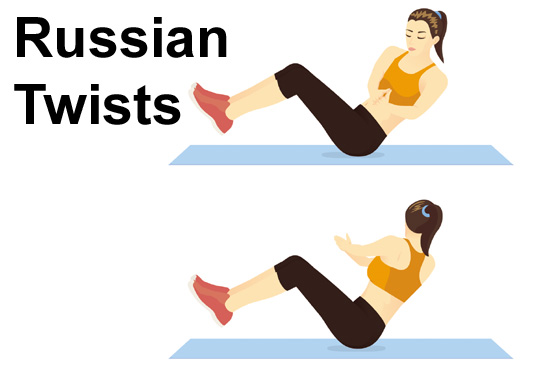
Russian Twists: Sit on the floor with knees bent and feet flat. Lean back slightly and elevate your feet off the ground. Rotate your torso to each side, bringing your hands toward the floor beside your hip. Keep the motion going for multiple reps.
Superman: Lie face down with arms extended in front. Simultaneously lift your arms, chest, and legs, creating a "U" shape. Hold briefly and lower back down. Repeat for multiple reps.

Dead Bug: Lie on your back with arms reaching toward the ceiling and knees bent at 90 degrees. Lower one arm and the opposite leg simultaneously while keeping your lower back against the floor. Return to the start and repeat with the other arm and leg. Perform multiple reps.

Bird-Dog: Begin on hands and knees in a tabletop position. Extend one arm and the opposite leg while maintaining an engaged core and a straight back. Hold for a moment and return to the starting position. Alternate sides and repeat for several reps.

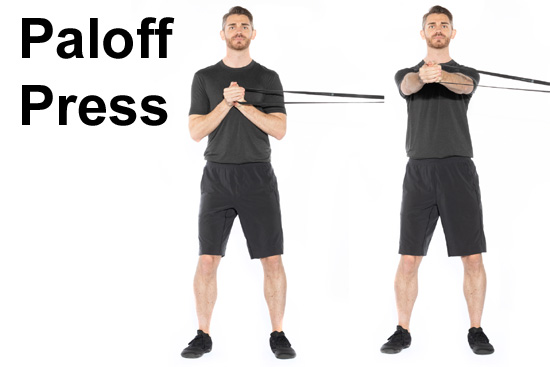
Paloff Press: Attach a resistance band to a stable point at chest height. Stand with feet apart, knees slightly bent, and good posture. Hold the band's handle close to your chest with both hands.
Start with the band close to your chest. Push the band straight out, extending your arms. Pause, engage your core, and stay steady. Slowly return the band to your chest.
Maintaining optimal core stability can prevent tightness in other parts of your body. Without core stability, your body seeks stability elsewhere, often relying on the hips, leading to tight hips and a limited range of motion.
Certain injuries, particularly those affecting the back and pelvis, can also contribute to core stability problems. Fear of aggravating past injuries may further deter individuals from engaging their core effectively.
Beyond pain prevention, practicing core stability exercises can significantly boost your gym performance and daily life activities. The better you can activate and control your midsection, the more efficient you'll be at any movement-based task.
Incorporate your favorite exercises into your routine two to four times a week, gradually adding multiplanar movements for real-life situations. Remember, control is vital, so perform the exercises with deliberate and measured movements.
Unlock the power of core stability, and you'll not only enhance your performance but also help safeguard your body against discomfort and injury.
Call for a FREE Consultation (305) 296-3434
CAUTION: Check with your doctor before
beginning any diet or exercise program.
11/10/2023


