


Lifting Straps (Wrist Straps):
When and Why You Should Use Them
If you’ve ever walked into a gym and noticed someone wrapping a thick piece of fabric around a barbell before lifting, you’ve seen lifting straps in action. They might look simple—just a couple of loops and some fabric—but these small pieces of gear can make a big difference in your workouts.
They’re made of durable fabric, often cotton or nylon, and designed to wrap around your wrists and the barbell or dumbbell you’re lifting. Think of them as a safety net. Just like how a tightrope walker uses a net to prevent a fall, lifting straps catch the weight for you when your grip gives out. They don’t do the lifting for you, but they help you hold on longer, which can be a game-changer when you’re trying to push past your limits.
When should you use lifting straps?
Heavy Deadlifts: When you’re trying to max out on deadlifts, your grip often gives out before your legs or back do. Straps can help you hold onto the bar to lift heavier without your hands being the weak link.
High-Rep Sets: If you’re doing a lot of reps, especially in exercises like rows or shrugs, your grip might tire out before your muscles do. Straps can help you get through the set without dropping the weight.
Working Around Injuries: If you’ve had a wrist or hand injury but still want to train, lifting straps can take some pressure off your grip. This way, you can keep working on your strength without straining your injury further.
Maintain Focus: Straps secure your hold on the bar, allowing you to pay closer attention to the muscles you’re targeting rather than constantly worrying about maintaining your grip.
Lifting straps aren’t necessary for every lift. For exercises where grip strength is crucial, like pull-ups, it’s better to go without them. If you rely on them too often, your grip may not improve at the same pace as the rest of your strength, leading to potential imbalances. This is why it’s important to balance strap use with exercises that help build grip strength naturally.
How to set up wrist straps.
Starting with the left, hold the looped end. Take the opposite end of the strap and feed it through the loop from the inside, with the strap pointing out. The strap is now pointing off to the LEFT, and it’s ready for the left hand.
Repeat with the right hand. Hold the looped end. Then, take the loose end of the strap and feed it through the loop from the inside, with the strap pointing out. This strap should point off to the right, and it’s ready for the right hand.

How to attach lifting straps.
Start by putting your whole hand, palm up, through the large loop you created. Then, lay the smaller loop down against your wrist. The end of the strap should be between your thumb and index finger. Pull it tight, and then do the same thing with your opposite hand.
Once the straps are secure on your wrist, place your hand on the bar with your thumb down. Always start with the strap on the side of the bar closest to you. Wrap the strap under the bar, pushing it with your thumb and pulling it over with your fingers. Wrap the strap around a couple of times, then twist with your wrist to tighten it. Grab and twist until it’s tight.
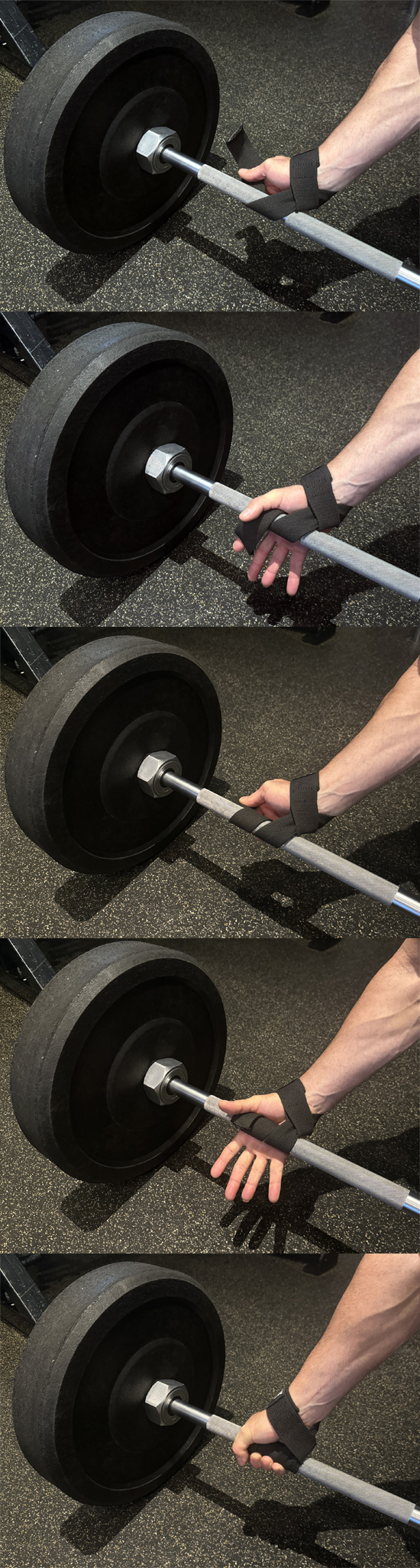
Using Lifting Straps
Repeat with the opposite hand. It’s important to practice this with each hand alone because once a hand is strapped, it cannot assist the other hand.
After wrapping the strap, grip the bar as you normally would. The strap should now be helping you hold the bar, taking some pressure off your fingers. You’ll notice that your grip feels stronger, allowing you to focus on the movement rather than worrying about dropping the weight.
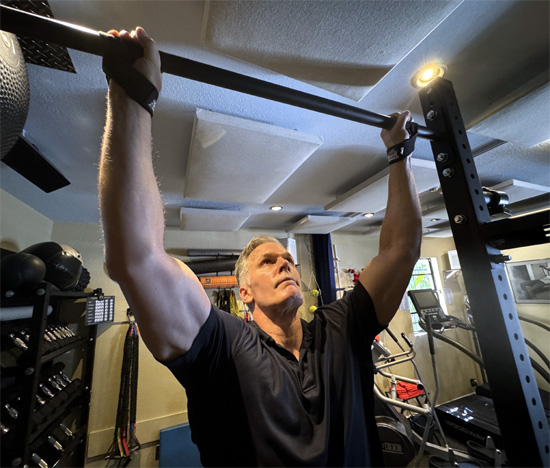
Lifting straps can also be used to assist with pullups.
Lifting straps aren’t for every workout, but when used correctly, they can help you break through plateaus and lift heavier than ever. Remember, they’re a tool—not a replacement for strong hands and a solid grip.
Call for a FREE Consultation (305) 296-3434
CAUTION: Check with your doctor before
beginning any diet or exercise program.
8/12/2024
Updated 9/25/2024
Updated 10/10/2024


