


Microplastics Are a Growing Concern in Our Daily Lives
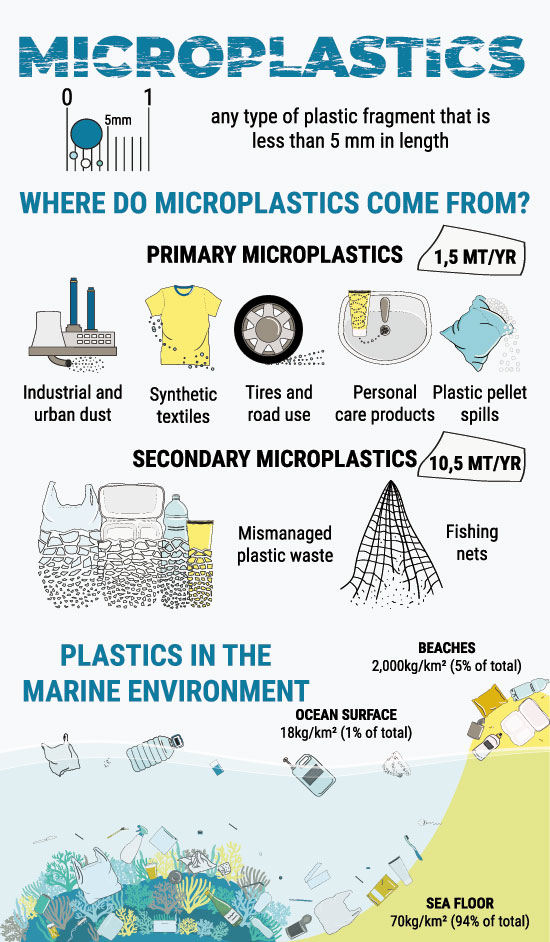
Imagine sitting down to a meal and realizing there's an invisible ingredient in every bite—plastic. Plastics are all around us, in bags, bottles, packaging, and clothing. When they break down, they don’t vanish. Instead, they turn into tiny pieces known as microplastics. Think of microplastics like dust that settles into everything over time.
Researchers have found microplastics in fish, beef, salt, fruits, vegetables, and even our drinking water. One study even found microplastics in human blood, which means these plastics are traveling inside us. It’s unsettling to think we’re carrying around bits of food packaging and water bottles without even realizing it.
How bad is the problem? It’s estimated that we consume tens of thousands of microplastic particles each year, and that’s a conservative estimate. One study found that people could be ingesting as much as a credit card’s worth of plastic each week.
One place we’re getting it from is bottled water. Researchers found that bottled water, often marketed as purer and safer, may actually contain more plastic than tap water.
The issue with bottled water comes down to the packaging. Plastic bottles can shed tiny bits of plastic into the water over time, especially when exposed to heat. Ever leave a water bottle in the car on a hot day? That’s when the leaching really starts. In some cases, a single liter of bottled water could contain thousands of tiny plastic pieces.
The real concern with microplastics is that they don’t just pass through our systems unnoticed. These tiny bits of plastic can be absorbed by our bodies and may cause harm over time. Studies suggest that ingesting microplastics could disrupt hormones, affect fertility, cause developmental problems in children, and even increase the risk of cancer. There’s also evidence that microplastics can cause inflammation in the gut and affect the immune system. Think of it as slowly filling your body with something that doesn’t break down. It’s not just about drinking one bottle of water but the cumulative effect over time.
So, what can you do to minimize your intake of microplastics? Luckily, you have options.
Switch from Bottled Water to Filtered Tap Water
Since bottled water is a significant source of microplastics, switching to tap water can make a big difference. But here’s the catch: tap water can still contain some microplastics, so investing in a good water filter is a smart move. Look for filters that are NSF-certified to reduce microplastics.
Choose the Right Containers: Glass and Stainless Steel Over Plastic
Once you’ve filtered your water, avoid storing it in plastic. Glass or stainless steel containers are much better options. At our training center, we offer clients free filtered water in stainless steel bottles. This not only cuts down on plastic waste but also reduces your exposure to microplastics. Stainless steel bottles don’t shed plastic particles into your water, and they’re durable, so they’ll last for years.
Minimize Plastic Use in Daily Life
Cut down on plastic use wherever you can. Use reusable shopping bags, ditch plastic straws, and avoid plastic-wrapped foods. Every bit helps. And if you’ve got a cupboard full of plastic containers, don’t panic; just avoid heating food in them. Heat causes plastic to break down faster, releasing even more microplastics into your food.
If you can afford to switch, glass food containers are a great alternative. Many are designed to go from the freezer to the microwave without a problem and they don’t stain or absorb odors.
Opt for Wood Cutting Boards Instead of Plastic
Choose wood cutting boards over plastic. Each time you chop on plastic, tiny plastic particles can end up in your food. After using any board, wash it with hot, soapy water, and occasionally sanitize with a diluted bleach solution (1 gallon of water mixed with 1 tablespoon of bleach). Always dry the board completely to prevent bacteria growth.
Cut Back on Fast Food and Plastic-Lined Packaging
Fast food is convenient, but it’s also usually served in plastic or plastic-lined containers. If you’re a regular, think about cutting back. It’ll reduce your plastic intake, and your body will probably thank you for eating healthier, too.
Microplastics are a part of modern life, and while they’re impossible to avoid completely, you can take simple steps to reduce your exposure. Filter your water, avoid plastic containers, and make mindful choices about what you eat and drink. It’s not about being perfect—it’s about progress. Small changes add up over time, and you’re doing your part to protect your health from these hidden invaders. After all, we wouldn’t knowingly sprinkle plastic into our food, so let’s take action to make sure it doesn’t sneak in.
Reference Links:
Synthetic Polymer Contamination in Bottled Water
Sherri A. Mason, Victoria G. Welch, Joseph Neratko
Frontiers in Chemistry, Published 10 September 2018
Microplastics in bivalves cultured for human consumption
Lisbeth Van Cauwenberghe, Colin R. Janssen
Environmental Pollution, Published Received 23 December 2013, Revised 15 April 2014, Accepted 18 June 2014, Available online 5 July 2014.
The presence of microplastics in commercial salts from different countries
Ali Karami, Abolfazl Golieskardi, Cheng Keong Choo, Vincent Larat, Tamara S. Galloway & Babak Salamatinia
Scientific Reports, Published 06 April 2017
Variation and Uncertainty of Microplastics in Commercial Table Salts: Critical Review and Validation
Hee-Jee Lee, Nan-Seon Song, Ji-Su Kim, Seung-Kyu Kim
Journal of Hazardous Materials, Published 15 January 2021, 123743
Microplastics contamination in food and beverages: Direct exposure to humans
Mengke Jin, Xue Wang, Tao Ren, Jian Wang, Jiajia Shan
Journal of Food Science, Published 19 June 2021 https://doi.org/10.1111/1750-3841.15802
Microplastics in drinking-water
Lead Authors: Pete Marsden, Bart Koelmans, Julie Bourdon-Lacombe, Todd Gouin, Lesley D’Anglada, David Cunliffe, Peter Jarvis, John Fawell, Jennifer De France
World Health Organization, Published 28 August 2019 | Technical document
Microplastics in drinking water: A review on methods, occurrence, sources, and potential risks assessment
Ling Yang, Shichang Kang, Xi Luo, Zhaoqing Wang
Environmental Pollution, Published 1 May 2024, 123857
Micro and nano plastics in fruits and vegetables: A review
Nina-Nicoleta Lazăr, Mădălina Călmuc, Ștefania-Adelina Milea, Puiu-Lucian Georgescu and Cătălina Iticescua
Heliyon, Published 2024 Mar 18. doi: 10.1016/j.heliyon.2024.e28291
Micro- and nano-plastics in edible fruit and vegetables. The first diet risks assessment for the general population
Gea Oliveri Conti PhD, Margherita Ferrante, Mohamed Banni, Claudia Favara, Ilenia Nicolosi, Antonio Cristaldi PhD, Maria Fiore PhD, Pietro Zuccarello PhD
Environmental Research, Published August 2020, 109677
Microplastics in the Environment: Intake through the Food Web, Human Exposure and Toxicological Effects
Concetta Pironti, Maria Ricciardi, Oriana Motta, Ylenia Miele, Antonio Proto, Luigi Montano, Andreu Rico, Academic Editor and Roberto Rosal, Academic Editor
TOXICS, Published 2021 Sep; 9(9): 224. Published online 2021 Sep 16. doi: 10.3390/toxics9090224
Microplastics in dairy products and human breast milk: Contamination status and greenness analysis of available analytical methods
Irédon Adjama, Hemen Dave, Bachir Yaou Balarabe, Vimbai Masiyambiri and Manka Marycleopha
Journal of Hazardous Materials Letters, Published November 2024, 100120
Call for a FREE Consultation (305) 296-3434
CAUTION: Check with your doctor before
beginning any diet or exercise program.
9/16/2024


