


How Much Exercise do You Need to Lose Weight?
Exercise is a critical component of weight loss. But just telling people to move more doesn't give you enough information. The two questions most people have are:
-
Exactly how long will I have to exercise to make a difference?
-
What types of workouts are best?
The best way to answer the first question is to break it down by results. According to the updated American College of Sports Medicine (ACSM) and Physical Activity Guidelines for Americans, here's what the research shows.
Level 1 - 60 Minutes Weekly. “Some physical activity is better than none. The greatest health risk comes from being totally sedentary. Getting up and moving is important to start reducing disease risk and claiming benefits. Some health benefits have been identified with as little as 60 minutes of activity a week. (ACSM)”
So 60 minutes a week will give you some health benefits. Whether this leads to weight loss depends on your diet and total energy balance. You won't necessarily gain weight at this activity level, contrary to older advice.
Level 2 - 150 Minutes Weekly: “A target of 150 minutes per week of moderate-intensity activity provides significant health benefits (additional benefits accrue to those who do more). (ACSM)”
150 minutes is better. You'll live longer and have fewer health concerns as you age. Some people lose weight at this level, especially when combined with dietary changes. Results vary widely between individuals.
Level 3 - 150 to 250 Minutes Weekly: Current guidelines recommend this range for substantial health benefits. Many people see modest weight loss in this zone, particularly when they include strength training. Your results depend on exercise intensity, diet quality, and individual factors.
Level 4 - 250 Minutes Weekly or More: This level often produces "clinically significant weight loss" in research studies. It's also where many people need to stay for long-term weight maintenance after losing weight.
That might sound like a lot, but break it down. If you exercise five days a week, that's about 45 minutes a workout. Spread it across six days, and you're down to just 38 minutes daily.
Some research suggests shorter, more intense workouts give better results. High-intensity interval training delivers similar benefits in less time. If you keep individual workouts shorter but more intense, you'll have energy for additional activities throughout the day.
There's also the "afterburn" effect. You continue burning calories when a workout is over. While this effect is modest for most people, doing multiple workouts weekly gives you more opportunities for that extra calorie burn.
Most people spend at least two hours daily on social media and another couple hours watching television. Carve out 30 minutes from each, and you've got all the time you need.
Click Here to learn how many calories different exercises burn.
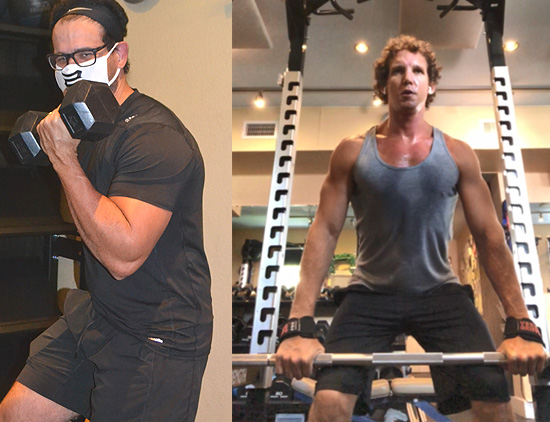
How much exercise do you need?
Now that you know how long you need to exercise, what workouts are best?
The simple answer is, any exercise that you'll do regularly is the best one for you. Jumping rope, lifting weights, cardio classes, and circuit training can all help improve your health and burn calories. It makes no sense to plan a program you have no intention of doing. However, some things give quicker and more reliable results than others.
First, aim for moderate to vigorous intensity during your workouts. You should feel your heart rate increase and breathing become deeper. Breaking a sweat is a good sign you're working hard enough.
Second, include aerobic activity spread across three to five days weekly. The most time-efficient approach uses interval workouts. Intervals allow you to get more exercise done in less time while improving fitness faster.
Third, challenge yourself with resistance or strength training at least two days a week. You lift weights, use machines, or work with your bodyweight. Just make sure to work all your major muscle groups. That means give your back just as much attention as your chest, your legs just as much attention as your arms.
Fourth, break up prolonged sitting throughout the day. Even short movement breaks count toward your weekly activity total and provide health benefits.
One final thought. Diet plays a larger role than exercise in weight loss, but both matter. There's no scientific consensus on exact ratios like "80% diet, 20% exercise." You cannot exercise your way out of poor eating habits. If your eating habits have you consuming 3,000 calories daily but you only burn 2,900, you'll gain weight.
Whatever your plan is, increase the time and intensity gradually. Start slow and grow. Every minute of movement counts, even short bursts of activity.
Reference Links:
Weight Loss in Short-Term Interventions for Physical Activity and Nutrition Among Adults With Overweight or Obesity: A Systematic Review and Meta-Analysis
Wendi Rotunda, Caroline Rains, Sara R. Jacobs, Valerie Ng, Rachael Lee, Stephanie Rutledge, Matt C. Jackson, Kristopher Myers
CDC Preventing Chronic Disease, Published April 4, 2024
Click Here for the Study: https://www.cdc.gov/pcd/issues/2024/23_0347.htm
National Guidelines for Physical Activity
Riya Gupta; Sarosh Vaqar.
National Library of Medicine - National Center for Biotechnology Information, Published Last Update: August 17, 2023.
Click Here for the Study: https://www.ncbi.nlm.nih.gov/books/NBK585062/
The Role of Exercise and Physical Activity in Weight Loss and Maintenance
Damon L. Swift, Neil M. Johannsen, Carl J. Lavie, Conrad P. Earnest, Timothy S. Church
Progress in Cardiovascular Diseases, Published online 11 October 2013
Click Here for the Study: https://doi.org/10.1016/j.pcad.2013.09.012
The Effect of High-Intensity Interval Training Type on Body Fat Percentage, Fat and Fat-Free Mass: A Systematic Review and Meta-Analysis of Randomized Clinical Trials
Fatemeh Khodadadi, Reza Bagheri, Raoof Negaresh, Sajjad Moradi, Michael Nordvall, Donny M. Camera, Alexei Wong and Katsuhiko Suzuki
Journal of Clinical Medicine, Published 15 March 2023
Click Here for the Study: https://doi.org/10.3390/jcm12062291
Aerobic Exercise and Weight Loss in Adults
A Systematic Review and Dose-Response Meta-Analysis
Ahmad Jayedi, Sepideh Soltani, Alireza Emadi, Mahdieh-Sadat Zargar, Ali Najafi
JAMA Network Open, Published Online: December 26, 2024
Click Here for the Study: https://doi.org/10.1001/jamanetworkopen.2024.52185
Resistance training effectiveness on body composition and body weight outcomes in individuals with overweight and obesity across the lifespan: A systematic review and meta-analysis
Pedro Lopez, Dennis R. Taaffe, Daniel A. Galvão, Robert U. Newton, Elisa R. Nonemacher, Victória M. Wendt, Renata N. Bassanesi, Douglas J. P. Turella, Anderson Rech
OBESITY MANAGEMENT/INTERVENTION, Published 21 February 2022
Click Here for the Study: https://doi.org/10.1111/obr.13428
Call for a FREE Consultation (305) 296-3434
CAUTION: Check with your doctor before
beginning any diet or exercise program.
10/26/2020
Updated 12/9/2020
Updated 9/24/2025


