


Nudge Yourself Healthy
Part 2 of 2
Last week we talked about one of the simplest tricks for eating better: stack healthy cooking onto something you already enjoy. Watch your show, make your meals, and suddenly you're not sacrificing anything. That's the whole nudge philosophy. Stop relying on willpower and start building an environment that makes the healthy choice the easy one.
This week, more of the same. Small shifts, real results.
Rearrange Your Refrigerator
This one takes about three minutes and costs nothing.
Right now your fruits and vegetables are probably in a drawer at the bottom of the fridge. Out of sight, slowly wilting, waiting to be thrown out at the end of the week. Meanwhile the things you're trying to eat less of are right at eye level every time you open the door.
Flip it. Move the fresh fruit and vegetables to the shelves where you can see them immediately. Move the sodas, the leftovers, and the tempting things to the drawers. You're not banning anything. You're just changing what you see first. Research on food environment design consistently shows that what's visible and easy to reach is what gets eaten. Make the good stuff the default.
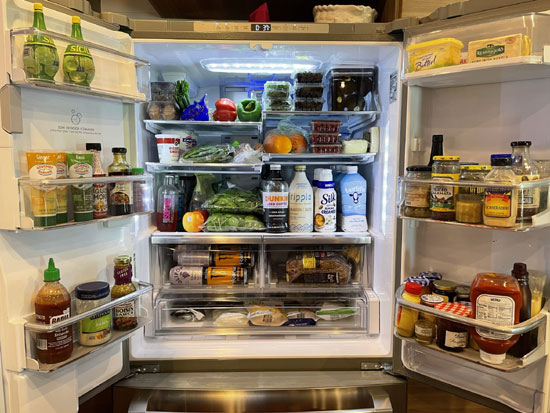
Put fruits, vegetables and other healthier choices at eye level in your refrigerator.
Stop thinking about gains. Start thinking about losses.
Here's something interesting about human psychology. We are much more motivated to avoid losing something than we are to gain something of equal value. Economists call it loss aversion.
Most health advice is framed as a future benefit. Exercise now and you'll feel better later. Eat well today and you'll live longer. Those rewards are real but they're distant and abstract, which is exactly why they don't move us.
Try flipping the frame. Instead of thinking about what you'll gain by making a healthy choice, think about what you lose when you don't. Skipping your walk doesn't just mean missing a workout. It means losing energy for the rest of the day. Eating poorly tonight doesn't just mean a moment of indulgence. It means feeling sluggish tomorrow morning. Immediate and personal consequences are far more motivating than distant and theoretical ones.
Plan when you're relaxed, not when you're hungry
Never make food decisions when you're hungry, rushed, or standing in a grocery store aisle surrounded by things designed to catch your eye.
Instead, make your shopping list during or right after a meal when you're full and calm. Look up a couple of recipes you want to cook this week. Write down exactly what you need. When you walk into the supermarket with a list and a plan, you spend less, waste less, and come home with things that actually support your goals rather than whatever looked good in the moment.
The same principle applies to exercise. Plan your workouts when you're feeling good, not when you're already tired and trying to talk yourself into it. Put them in your calendar like any other appointment. Pack your gym bag the night before so there's no friction in the morning. The decision should already be made before the moment arrives.
Start Embarrassingly Small
Most people set themselves up to fail by aiming too high too fast. Committing to five workouts a week when you're currently doing zero is not ambitious. It's a setup for disappointment.
Two days a week is a massive improvement over none. A fifteen minute walk at lunch beats sitting at your desk. Showing up and doing less than planned still counts. The goal at the beginning isn't fitness. It's habit. You're teaching your brain that this is something you do, and that lesson only takes hold through repetition, not intensity.
Start small enough that it feels almost too easy. Then build from there.
Stop exercising. Start playing.
This is the one that makes the biggest difference for people who genuinely hate working out. Nobody dreads playing. We dread exercising because the word itself carries weight. It sounds like obligation, like effort, like something you're supposed to do but don't really want to.
So don't exercise. Learn the dance that's all over your social media feed. Find a friend and go for a bike ride in the evening. Jump rope in the driveway before your morning shower. Sign up for a beginner skating class or dust off a skateboard. Take your dog somewhere new and walk farther than usual. Play pickleball. Try paddleboarding. Find something that makes you slightly ridiculous and do it anyway.
The physical benefit is identical. The psychological experience is completely different. When you're having fun, you don't watch the clock. You don't count reps. You come back because you want to, not because you're supposed to.
That's the whole point of the nudge approach. You're not overhauling your personality or developing iron discipline. You're just making it a little easier to do the things that are good for you, and a little harder to do the things that aren't. Small shifts, repeated consistently, add up to something real.
Part 1 2
Reference Links:
The inspiration and some of the information for this article came from Nudge: The Final Edition. It's a book written by Richard H. Thaler and Cass R. Sunstein.
In the author's words:
A nudge, as we will use the term, is any aspect of the choice architecture that alters people's behavior in a predictable way without forbidding any option or significantly changing their economic incentives. To count as a mere nudge, the intervention must be easy and cheap to avoid. Nudges are not taxes, fines subsidies bans or mandates. Putting the fruit at eye level counts as a nudge. Banning junk food does not.
Not all the suggestions in this two part article are nudges, but they are all based on methods that have helped people make better choices.
Call for a FREE Consultation (305) 296-3434
CAUTION: Check with your doctor before
beginning any diet or exercise program.
2/21/2022
Updated 4/23/2026


