


Ozempic, Wegovy, and Mounjaro
A New Chapter in Weight Loss - Part 1 of 2
In the realm of weight management, where countless diet pills have been tested and failed, new players have emerged on the scene, promising a different approach to shedding those extra pounds. Ozempic and Wegovy have taken center stage to help individuals battle the bulge. As their popularity surges and stories of shortages circulate, let's dive into what makes these drugs stand out in the quest for weight loss.
Ozempic, also known by its generic name semaglutide, is making waves as a promising tool for weight management. (Wegovy is the same drug, just a larger dose, and marketed specifically for weight loss.) This medication belongs to a class called GLP-1 receptor agonists, a group of drugs developed initially for managing type 2 diabetes. However, Ozempic's dual-action ability to regulate blood sugar levels and reduce appetite has propelled it into the weight loss spotlight.
Over the next few months, you'll also hear about the drug Mounjaro (tirzepatide). It's similar to Ozempic and Wegovy, but it goes further. It doesn't just target GLP-1; it also targets glucose-dependent insulinotropic polypeptide (GIP). It adds a second component in to strengthen the weight loss effects.
For the rest of this article, we will refer to these medications as GLP-1 drugs.
So how do these drugs work? Imagine your body is like a car that needs fuel to run, and the fuel it uses is called sugar or glucose. In people with type 2 diabetes, the body has trouble using this fuel properly. GLP-1 drugs are like a helper that comes in to make things work better.
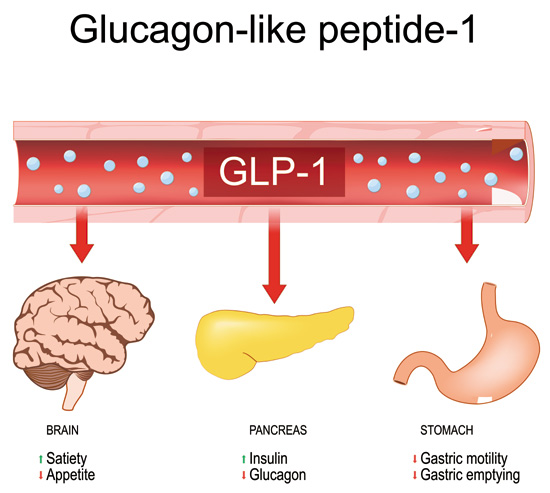
GLP-1 drugs talk to special parts in your body called "GLP-1 receptors." These receptors are like little switches that help control how your body uses sugar. When you take the medication, it presses these switches to help your body in four significant ways:
1. More Insulin: Insulin is like a key that lets sugar into your cells so they can use it for energy. GLP-1 drugs help your body make more of this key, so sugar can enter the cells and be used up. The drug stimulates the pancreas to release more insulin, like a jockey on a racehorse, to push glucose into the cells at a faster rate.
2. Less Extra Sugar: Sometimes, your liver releases extra sugar into your blood, which can be a problem for people with diabetes. GLP-1 drugs help tell your liver to hold onto that excess sugar so it doesn't raise your blood sugar too much.
3. Slower Tummy: GLP-1 drugs slow down how quickly your tummy lets food into your intestines. This helps to keep the sugar from food from going into your blood all at once and causing big spikes in your blood sugar.
4. Less Hungry: GLP-1 drugs make your brain feel like you're not as hungry. This can help you eat less and manage your weight better.
The benefits are clear. You get better blood sugar control, weight loss, reduced risk of low blood sugar, and it's easy to use. Just one shot a week.
However, the history of diet drugs has shown us that nothing is as simple as it may first appear. The minor problems include stomach upset, nausea, vomiting and tummy pain. A full one-third of the people who start these drugs stop taking them within two months because of the side effects.
Ozempic, Wegovy and Mounjaro all list nausea and vomiting as the most common side effects. But they may not be actual side effects, but one of the CAUSES of weight loss.
GLP-1 drugs make food less appetizing. Becoming nauseous when you start eating isn't a bug; it's a feature that helps you reduce your food intake. If you throw up, that's the drug doing its job a little too well.
You might be surprised to learn doctors don't really know how these drugs work. Under normal circumstances, when you increase the levels of insulin released in the body (which is what GLP-1 drugs do), then you should be forcing more energy into fat. If you're storing more fat, you shouldn't be losing weight. Yet, people ARE losing weight.
The simple reason is that GLP-1 drugs cause people to eat less by throwing your body into starvation mode, which can lead to a whole range of additional problems. I'll cover those in my article next week. Click here for part three.
Part 1 2 3
Call for a FREE Consultation (305) 296-3434
CAUTION: Check with your doctor before
beginning any diet or exercise program.
8/21/2023


