


Promising Weight Loss Drugs with a Catch
Ozempic, Wegovy, and Mounjaro - Part 2 of 2
In my previous article I shared information about a revolutionary new class of drugs called GLP-1 receptor agonists. You've probably seen the commercials or heard stories about Ozempic, Wegovy and Mounjaro.
People are losing an average of 15% of their body weight, with many losing dramatically more. For the first time in over 100 years, pharmaceutical companies may have finally made an effective weight loss pill.
But there's a big problem, and it's significant for people over 60. It's called sarcopenia. Sarcopenia is a medical term that describes the gradual loss of muscle mass, strength, and function that occurs as a natural part of aging.
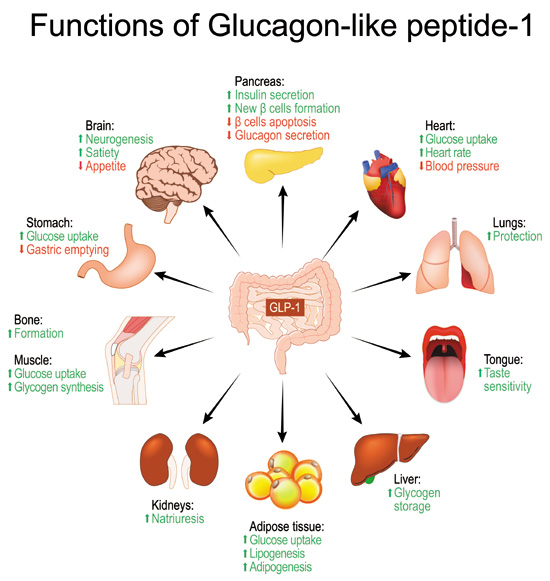
When people lose weight on GLP-1 drugs, it's not just fat: They lose equal amounts of fat and muscle. This weakening of muscles can lead to decreased mobility, balance problems, and an increased risk of falls and fractures. If you're in your 60s, 70s or 80s and are already dealing with significant muscle loss because of aging, the additional loss of muscle you suffer when you take GLP-1 drugs can be traumatic. Of course, there are plenty of other side effects.
Some of the more extreme side effects include diabetic retinopathy (damaged blood vessels in the eye), gallbladder disease, including gallstones or cholecystitis (gallbladder pain and swelling), kidney problems, pancreatitis (swelling of the pancreas), increased risk of thyroid cancer, allergic reaction, and hypoglycemia (low blood sugar).
Now if those are the only side effects that are found after 3-5 years of taking the medication, then it would certainly seem like the benefits might outweigh the risks. Heart attack, stroke, and cancer risks from being obese are life threatening.
Unfortunately, we don't have long-term data showing GLP-1 drugs CAN reduce the risk of heart attack, stroke or cancer. That's not what the drugs were approved to do.
There are other concerns as well. In America, where millions of people have no insurance, or they have deductibles in the thousands of dollars, GLP-1 drugs may be too expensive. Without insurance, the cost as of August 2023 is about $1,300 a month.
There's another problem. You may have to keep taking these drugs for the rest of your life.
In a study published in 2022, people who stopped taking semaglutide after regular use gained back an average of two-thirds of the weight they lost in a year. The trial was funded by Novo Nordisk, the company that makes Ozempic and Wegovy.
"One year after withdrawal of once-weekly subcutaneous semaglutide 2.4 mg and lifestyle intervention, participants regained two-thirds of their prior weight loss,"
If a drug helps you eat less, but you're still eating unhealthy options, it's just reducing the volume of toxic food you're putting in your body.
But there's more than just the harmful effects of unhealthy food. More than half the health problems people experience comes from the nutritious foods we DON'T eat. The lack of healthy antioxidants, vitamins and minerals can be as bad for our health as the damage caused by junk food.
It's not enough to avoid the bad stuff; we must actively seek out good foods. If GLP-1 drugs simply reduce the amount of unhealthy food you're eating and you don't replace it with more nutritious choices, there's the potential for serious long-term consequences.
GLP-1 drugs do not address food addiction overeating, which is relevant to many people taking it. If you lock an alcoholic up in jail, they won't drink because they don't have access. Without addressing the reasons they drank, the alcoholism is still there, but the substance has been removed. When they get released, they will likely immediately binge on their substance of choice.
These drugs might best be used as a jump start for the extremely obese in conjunction with dietary changes.
Ultimately we've got to change our approach to food itself. We must reduce the highly processed empty calories and learn how to buy, prepare and enjoy nutritionally beneficial foods.
Right now, you get a prescription, take your weekly shot, and if you've got a good doctor, they're monitoring your reactions to ensure you're not having a problem.
If you're clinically obese and your doctor has prescribed this new medication, take one extra step. Make an appointment with a licensed dietitian. Go over what you eat, what you need, and have the dietitian help you put together a healthier plan.
If you can't afford a dietitian or your insurance doesn't cover it, try the alphabet mission. Every week eat a vegetable that starts with a different letter of the alphabet. For the letter "A," you could try arugula or asparagus. "B" might be beets or broccoli.
Make an album that includes all the recipes and what you liked or didn't like about them. If you do only one letter a week, you'll finish all 26 in six months. At the end of the alphabet mission, you'll have discovered a list of new healthy foods and ways to prepare them.
Part 1 2 3
UPDATE 1/24/2024
After looking at nearly 40,000 patient records, researchers said the results were "consistent with those previous studies." When stopping the weight loss drugs, many patients put the weight back on and some grew heavier. But there was good news.
Details: In the example of semaglutide, researchers looked at 20,274 patients who lost at least 5 pounds while they took the drug.
Nearly 20% of patients regained all the weight they had lost or more in the 12 months after stopping that drug, and another 26% regained more than a quarter of their original weight but were short of total regain.
About 20% of patients essentially maintained their loss, meaning they didn't regain or lose more than a quarter of their weight.
And more than 1 in 3 patients continued to lose weight in the 12 months after stopping the drug.
We will keep you updated over the next few years as we start to get data on the long-term effects of these new drugs.
Reference Links:
Weight regain and cardiometabolic effects after withdrawal of semaglutide: The STEP 1 trial extension
John P. H. Wilding D.M, Rachel L. Batterham MBBS, Melanie Davies M.D, Luc F. Van Gaal M.D, Kristian Kandler M.D, Katerina Konakli PhD, Ildiko Lingvay M.D, Barbara M. McGowan M.D, Tugce Kalayci Oral MD, Julio Rosenstock M.D, Thomas A. Wadden Ph.D, Sean Wharton M.D, Koutaro Yokote M.D, Robert F. Kushner M.D, STEP 1 Study Group
Diabetes, Obesity and Metabolism, Published 19 April 2022 https://doi.org/10.1111/dom.14725
Many Patients Maintain Weight Loss a Year After Stopping Semaglutide and Liraglutide
Kersten Bartelt, RN • Chris Mast, MD • Joe Deckert, PhD, Matthew Gracianette, MD • Brendan Joyce
Epic Research, Published January 23, 2024
Call for a FREE Consultation (305) 296-3434
CAUTION: Check with your doctor before
beginning any diet or exercise program.
8/21/2023
Updated 1/24/2024


