


Is Eating More Protein Dangerous?
What the Evidence Actually Shows (Part 2 of 2)
After my recent column on protein needs, a familiar concern came up.
"OK," people said, "but isn't eating more protein bad for you?"
It's a fair question. Protein has somehow earned a reputation as both essential and dangerous. Let's clear that up.
Much of the fear around protein comes from how nutrition guidelines were built. The current recommendation, 0.8 grams per kilogram of body weight per day, describes the minimum needed to prevent deficiency, not the optimal intake for strength, mobility, or healthy aging. It is based on nitrogen-balance studies that undercount protein losses through sweat, skin, breath, feces, and incomplete urine collection.
Newer research using stable-isotope techniques consistently points higher, to between 1.2 and 1.6 grams per kilogram per day, about 50 percent above current recommendations, as a realistic floor for maintaining muscle mass and supporting strength.
The problem is that “recommended” gets misread as “ideal,” and anything above it gets labeled excessive or risky.

Animal studies showing lifespan benefits from protein restriction involve sedentary lab animals in controlled settings. Large observational studies in humans muddle the picture by grouping active and inactive people together. When studies separate these groups, the picture becomes clearer.
The most common worry is about kidney health. Let me be clear. Studies show that in people with healthy kidneys, higher protein intake does not damage kidney function. When protein intake rises, the kidneys filter more nitrogenous waste. That is normal physiological adaptation, not injury.
Studies in resistance-trained adults consuming very high protein intakes, as much as 3.2 to 4.5 grams per kilogram per day for up to one year, show no adverse changes in standard kidney or liver markers.
If someone already has kidney disease, protein intake should be managed with medical guidance. But even here, emerging research suggests that higher protein intake is associated with reduced mortality risk, challenging traditional protein-restriction guidelines.
For the average healthy adult, protein is not the kidney threat it is often made out to be.
Does protein increase cancer or speed up aging? This concern centers on growth-related pathways, particularly mTOR and IGF-1. The argument: protein stimulates these growth signals, and growth signals must accelerate aging and cancer.
Context matters here.
Exercise fundamentally changes how your body uses protein. It redirects growth signals to the muscle and the brain instead of leaving them circulating in your bloodstream. In muscles, they drive repair and growth. In the brain, they support the formation of new nerve cells. Exercise also reduces the availability of these signals to potentially harmful cells.
For sedentary people eating high protein, the same intake is not leveraged the same way. Movement quality and quantity matter as much as grams.
If chronically high protein intake combined with hard training were broadly harmful, we would expect lifelong athletes to die younger. They do not. Elite athletes, including Olympians, endurance professionals, and major-league athletes, typically live four to eight years longer than average, with lower rates of cancer and cardiovascular mortality.
The real risk most people face isn't eating too much protein. It is eating too little while moving too little.
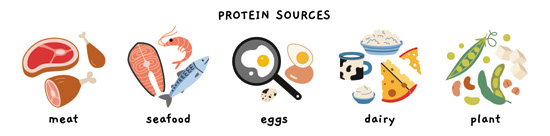
A 50 percent increase in protein intake above the recommended daily allowance (RDA), to about 1.2 grams per kilogram per day, is linked to less age-related muscle loss. Older women who consume 1.2 grams per kilogram per day are about 30 percent less likely to become frail as they age.
Protein does not replace exercise. Exercise does not replace protein. They work together.
For most adults, especially as we age, adequate protein paired with regular movement is one of the most reliable ways to stay strong, independent, and resilient. That means staying active in the ways you enjoy, eating protein at most meals, and not overthinking the details.
The evidence is clear. Higher protein intakes support the things that matter: carrying groceries, climbing stairs, recovering from illness, and maintaining the strength to do what you want to do as you get older.
You do not need to fear protein. You need to use it.
Part 1 2
Reference Links:
Meta-analysis of nitrogen balance studies for estimating protein requirements in healthy adults
William M Rand, Peter L Pellett, Vernon R Young
The American Journal of Clinical Nutrition, Published Volume 77, Issue 1, January 2003, Pages 109-127
Click Here for the Study: https://doi.org/10.1093/ajcn/77.1.109
The effects of a high protein diet on indices of health and body composition – a crossover trial in resistance-trained men
Jose Antonio, Anya Ellerbroek, Tobin Silver, Leonel Vargas & Corey Peacock
Journal of the International Society of Sports Nutrition, Published 01 Apr 2022
Click Here for the Study: https://doi.org/10.1186/s12970-016-0114-2
Dietary glycemic index and glycemic load are associated with high-density-lipoprotein cholesterol at baseline but not with increased risk of diabetes in the Whitehall II study
Annhild Mosdøl, Daniel R Witte, Gary Frost, Michael G Marmot, Eric J Brunner
The American Journal of Clinical Nutrition, Published 2007 Oct;86(4):988-94. doi: 10.1093/ajcn/86.4.988.
Click Here for the Study: https://doi.org/10.1093/ajcn/86.4.988
A high protein diet (3.4 g/kg/d) combined with a heavy resistance training program improves body composition in healthy trained men and women – a follow-up investigation
Jose Antonio, Anya Ellerbroek, Tobin Silver, Steve Orris, Max Scheiner, Adriana Gonzalez & Corey A Peacock
Journal of the International Society of Sports Nutrition , Published 01 Apr 2022
Click Here for the Study: https://doi.org/10.1186/s12970-015-0100-0
APOL1-G1 in Nephrocytes Induces Hypertrophy and Accelerates Cell Death
Fu, Yulong; Zhu, Jun-yi; Richman, Adam; Zhang, Yi; Xie, Xuefang; Das, Jharna R.; Li, Jinliang; Ray, Patricio E.; Han, Zhe
STUDYJOURNAL, Published 06 June 2017
Click Here for the Study: https://doi.org/10.1681/asn.2016050550
Dietary Restrictions in Dialysis Patients: Is There Anything Left to Eat?
Kamyar Kalantar-Zadeh, Amanda R. Tortorici, Joline L. T. Chen, Mohammad Kamgar, Wei-Ling Lau, Hamid Moradi, Connie M. Rhee, Elani Streja, Csaba P. Kovesdy
Seminars in Dialysis Views, Visions and Vistas in Dialysis, Published 03 February 2015
Click Here for the Study: https://doi.org/10.1111/sdi.12348
Changes in Physical Performance in Older Women According to Presence and Treatment of Diabetes Mellitus
Christine G. Lee MD, Ann V. Schwartz PhD, Kristine Yaffe MD, Teresa A. Hillier MD, Erin S. LeBlanc MD, Peggy M. Cawthon PhD, for the Study of Osteoporotic Fractures Research Group
Journal of the American Geriatrics Society, Published 28 October 2013
Click Here for the Study: https://doi.org/10.1111/jgs.12502
Dietary protein intake is associated with lean mass change in older, community-dwelling adults: the Health, Aging, and Body Composition (Health ABC) Study
Denise K Houston, Barbara J Nicklas, Jingzhong Ding, Tamara B Harris, Frances A Tylavsky, Anne B Newman, Jung Sun Lee, Nadine R Sahyoun, Marjolein Visser, Stephen B Kritchevsky
The American Journal of Clinical Nutrition, Published 2008 Jan;87(1):150-5. doi: 10.1093/ajcn/87.1.150.
Click Here for the Study: https://doi.org/10.1093/ajcn/87.1.150
Elite Athletes Live Longer Than the General Population: A Meta-Analysis
Nuria Garatachea, Alejandro Santos-Lozano, Fabian Sanchis-Gomar, Carmen Fiuza-Luces, Helios Pareja-Galeano, Enzo Emanuele, Alejandro Lucia
MAYO Clinic Proceedings, Published Volume 89, Issue 9p1195-1200September 2014s
Click Here for the Study: https://doi.org/10.1016/j.mayocp.2014.06.004
Survival of the fittest: retrospective cohort study of the longevity of Olympic medallists in the modern era
Philip M Clarke, Simon J Walter, Andrew Hayen, William J Mallon, Jeroen Heijmans, David M Studdert
BMJ Journals British Journal of Sports Medicine, Published 2015 Jul;49(13):898-902. doi: 10.1136/bjsports-2015-e8308rep.
Click Here for the Study: https://doi.org/10.1136/bjsports-2015-e8308rep
Call for a FREE Consultation (305) 296-3434
CAUTION: Check with your doctor before
beginning any diet or exercise program.
1/18/2026


