How Much Protein Do You Really Need?
Leucine is the Key to Unlocking Protein’s Muscle-Building Power (Part 1 of 2)
Whether you're trying to build muscle or just keep what you have, the protein advice out there is confusing. You hear contradictory rules: "Your body can only use 25 grams at once," "Timing doesn't matter," "Just hit your daily total," and "Eat protein every two hours." Half of it's wrong, and the other half is missing context. Let's cut through the noise and get to what actually works.
You Absorb More Than You Think
Your body absorbs almost all the protein you eat, whether it’s from a steak or a shake. The real issue isn’t absorption, it’s where the amino acids go once they’re in your bloodstream. Amino acids are the building blocks of protein, and your muscles compete with other tissues for them. Research suggests that only a small fraction of what you eat, sometimes as little as 10 percent, is used for muscle protein synthesis, while the rest supports other vital functions in your body.
Hit the Leucine "Switch" Each Meal
Leucine is the amino acid that signals your muscles to start building new protein. Think of it like flipping a switch. You need about 2.5–3 grams of leucine in a meal to turn on muscle protein synthesis. That's what researchers call the "leucine threshold."
What it looks like on your plate.
• 25-30 grams of chicken breast
• 3-4 whole eggs
• A cup of Greek yogurt
• 3.5 oz of lean beef or fish
• 25 grams of whey protein
• Half cup of cottage cheese plus an egg
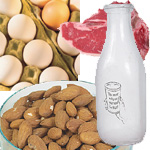
Most decent servings of meat, eggs, or dairy will get you there. Think 20–40 grams of high-quality protein per meal.

Older Muscles Get Pickier
As you get older, your muscles develop what scientists call "anabolic resistance." Think of it like your muscles' hearing going bad. They need you to speak louder to get the message.
Research shows that older adults often need closer to 35-40 grams of protein at a meal to maximize muscle response, compared to the 20-25 grams that work well for younger adults. By middle age and especially after 60, muscles respond better to these larger protein servings.
When You're Cutting Weight, Prioritize High-Protein Foods
Here's the key insight: whether you're building muscle or losing fat, your protein needs stay roughly the same, about 0.7-1.0 grams per pound of body weight daily (1.6-2.2 g/kg).
The difference is your total calories.
When you're cutting, you're eating fewer total calories but need the same amount of protein. This means choosing leaner, higher-protein foods and cutting back on fats and carbs.
This higher protein intake during weight loss helps preserve muscle mass. For a 180-pound person, that's about 125-180 grams of protein daily. In more aggressive cuts, some athletes may go higher, but the 0.7-1.0g per pound range works well for most people trying to lose weight.
Timing Matters
Your total daily protein intake is the biggest factor for building and maintaining muscle. But some meal timings may offer extra benefits, especially if you're training regularly or getting older.
Three times when protein timing may give you an edge:
Morning: You've been fasting all night. Your muscles are in breakdown mode. That bagel isn't going to flip the switch back to building.
After workouts: Your muscles are ready to grow, but they need materials. You don't need to panic about timing. You have hours, not minutes.
Before bed: Slow-digesting protein (like casein) can help maintain amino acid levels overnight, potentially reducing the normal breakdown that happens during the long fast of sleep.
Your muscles grow best when you hit that leucine threshold three to four times a day with solid meals.
Is More Always Better?
The muscle-building response to a single meal typically maxes out around 20-40 grams of protein for most people. More won't hurt and may help in other ways, but it won't add more muscle building from that particular meal.
If you're doing full-body workouts or you're a bigger person, you might benefit from the higher end. But don't stress about perfection.
Plain Advice You Can Use
• Eat 20–40 grams of high-quality protein per meal
• Make breakfast, post-workout, and dinner your priorities
• Bump it to 35–40 grams per meal if you're in middle age or older
• Make sure each meal has enough protein to hit the leucine threshold
• Grazing on low-protein snacks won't trigger muscle building
• Daily protein target stays the same whether building or cutting: 0.7-1.0g per pound (1.6-2.2g per kg)
• When cutting, choose higher-protein foods to fit your target into fewer total calories
Your muscles don't need perfect timing or expensive supplements. They need enough high-quality protein spread throughout the day to hit that leucine threshold regularly. Get that right, and your muscles will respond at any age.
Part 1 2
Reference Links:
Impacts of protein quantity and distribution on body composition
Donald K. Layman
frontiers in Nutrition, Published 02 May 2024
Click Here for the Study: https://doi.org/10.3389/fnut.2024.1388986
The effectiveness of leucine on muscle protein synthesis, lean body mass and leg lean mass accretion in older people: a systematic review and meta-analysis
Zhe-rong Xu, Zhong-ju Tan, Qin Zhang, Qi-feng Gui and Yun-mei Yang
Cambridge University Press, Published 19 September 2014
The anabolic response to a meal containing different amounts of protein is not limited by the maximal stimulation of protein synthesis in healthy young adults
Il-Young Kim, Scott Schutzler, Amy Schrader, Horace J Spencer, Gohar Azhar, Arny A Ferrando, Robert R Wolfe
American Journal of Physiology - Endocrinology and Metabolism, Published 2015 Nov 3;310(1):E73–E80. doi: 10.1152/ajpendo.00365.2015
Click Here for the Study: https://pmc.ncbi.nlm.nih.gov/articles/PMC4675798/
Dietary Protein Distribution Positively Influences 24-h Muscle Protein Synthesis in Healthy Adults1,2,3
Madonna M Mamerow, Joni A Mettler, Kirk L English, Shanon L Casperson, Emily Arentson-Lantz, Melinda Sheffield-Moore, Donald K Layman, Douglas Paddon-Jones
Elsevier The Journal of Nutrition, Published 2014 Jan 29;144(6):876–880. doi: 10.3945/jn.113.185280
Click Here for the Study: https://pmc.ncbi.nlm.nih.gov/articles/PMC4018950/
Maximizing Post-exercise Anabolism: The Case for Relative Protein Intakes
Daniel R. Moore
frontiers in Nutrition, Published 09 September 2019
Click Here for the Study: https://www.frontiersin.org/journals/nutrition/articles/10.3389/fnut.2019.00147/full
Is an Energy Surplus Required to Maximize Skeletal Muscle Hypertrophy Associated With Resistance Training
Gary John Slater, Brad P Dieter, Damian James Marsh, Eric Russell Helms, Gregory Shaw, Juma Iraki
frontiers in Nutrition, Published 2019 Aug 20;6:131. doi: 10.3389/fnut.2019.00131
Click Here for the Study: https://pmc.ncbi.nlm.nih.gov/articles/PMC6710320/
Critical variables regulating age-related anabolic responses to protein nutrition in skeletal muscle
Colleen S. Deane, Jake Cox, Philip J. Atherton
frontiers in Nutrition, Published 05 August 2024
Click Here for the Study: https://www.frontiersin.org/journals/nutrition/articles/10.3389/fnut.2024.1419229/full
Evaluating the Leucine Trigger Hypothesis to Explain the Post-prandial Regulation of Muscle Protein Synthesis in Young and Older Adults: A Systematic Review
Gabriele Zaromskyte, Konstantinos Prokopidis, Theofilos Ioannidis, Kevin D Tipton, Oliver C Witard
frontiers in Nutrition, Published 2021 Jul 8;8:685165. doi: 10.3389/fnut.2021.685165
Click Here for the Study: https://pmc.ncbi.nlm.nih.gov/articles/PMC8295465/
How much protein can the body use in a single meal for muscle-building? Implications for daily protein distribution
Brad Jon Schoenfeld, Alan Albert Aragon
Journal of the International Society of Sports Nutrition, Published 2018 Feb 27;15:10. doi: 10.1186/s12970-018-0215-1
Click Here for the Study: https://pmc.ncbi.nlm.nih.gov/articles/PMC5828430/
The anabolic response to protein ingestion during recovery from exercise has no upper limit in magnitude and duration in vivo in humans
Jorn Trommelen, Glenn A.A. van Lieshout,Jean Nyakayiru, Andrew M. Holwerda, Joey S.J. Smeets, Floris K. Hendriks, Janneau M.X. van Kranenburg, Antoine H. Zorenc, Joan M. Senden, Joy P.B. Goessens, Annemie P. Gijsen, Luc J.C. van Loon
Cell Reports Medicine, Published 19 December 2023, 101324
Click Here for the Study: https://www.sciencedirect.com/science/article/pii/S2666379123005402
Protein digestion and absorption: the influence of food processing
Simon M. Loveday
Cambridge University Press, Published 16 December 2022
Click Here for the Study: https://www.cambridge.org/core/journals/nutrition-research-reviews/article/protein-digestion-and-absorption-the-influence-of-food-processing/450969B0DF46904613ADD5048F73FAC6
Call for a FREE Consultation (305) 296-3434
CAUTION: Check with your doctor before
beginning any diet or exercise program.
8/25/2025
Updated 1/19/2026