


Combating Cholesterol
When a doctor starts an appointment with "I've got some bad news," you know it's not going to be a great day.
That's how a friend of mine learned he had seriously elevated cholesterol. His doctor explained what it meant, wrote a prescription for a statin, scheduled a follow-up, and sent him on his way.
My friend already took a handful of pills every day for other health issues. He was going to take the ones the doctor prescribed, but he wanted to know if there was anything else he could do. I told him yes, but it would mean taking a hard look at how he was living.
What cholesterol actually is.
Before we get to what changed, it helps to understand what cholesterol actually is. When a doctor talks about your cholesterol, they're usually looking at several numbers.
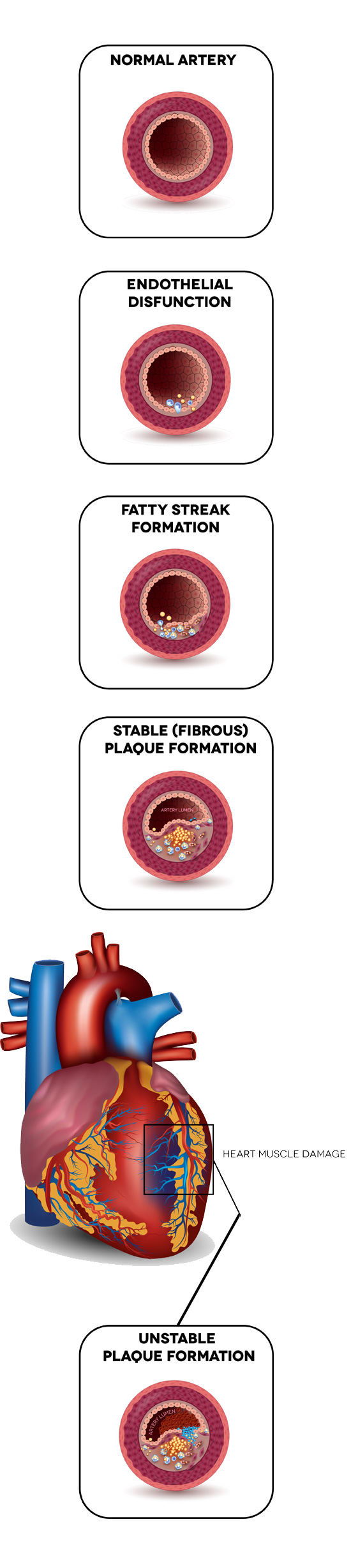
LDL is the type most associated with arterial plaque and cardiovascular risk. LDL particles can enter artery walls, become trapped, and contribute to plaque buildup over decades, which is why lowering LDL reduces cardiovascular risk.
HDL is generally associated with lower cardiovascular risk, though research has shown that artificially raising HDL doesn't consistently reduce heart disease, so it's better understood as a marker than a target.
Triglycerides are a form of fat in the blood that rises with poor diet, inactivity, and excess weight.
Total cholesterol, the single number many people fixate on, is actually the least useful of the bunch on its own. What matters more is how your LDL, HDL, and triglycerides combine with other factors like your age, blood pressure, family history, and whether you smoke or have diabetes. That full picture determines your actual cardiovascular risk far better than any single number.
One more thing worth knowing: genetics play a significant role in cholesterol levels. Some people eat well, exercise regularly, maintain a healthy weight, and still have LDL numbers that require medication. That's not a failure, it's biology. A condition called familial hypercholesterolemia, for example, causes very high LDL regardless of lifestyle, and medication is almost always necessary. High cholesterol is not always a lifestyle problem, and it's important to say that plainly.
The diet piece: it's about fat, not just cholesterol.
Here's something that has changed significantly since the early days of cholesterol research. For decades, people were told to avoid foods high in dietary cholesterol, including eggs and shellfish. That blanket rule has been substantially revised. The 2015 Dietary Guidelines for Americans removed the longstanding 300 mg per day cap on dietary cholesterol, and guidelines now focus far more on overall eating patterns than on counting milligrams of cholesterol.
That said, the revision isn't a green light for everyone. People with high LDL, diabetes, or existing heart disease are still advised to be mindful of cholesterol-rich foods, and the American Heart Association still recommends moderation rather than unlimited consumption. The bigger shift is this: saturated fat is the main dietary driver of elevated LDL, and dietary cholesterol has a smaller but still measurable effect on top of that. Eggs and shellfish are unusual in that they contain cholesterol but are relatively low in saturated fat, which is why they're treated differently from fatty meats and full-fat dairy.
The real problem in my friend's breakfast wasn't the eggs. It was the sausage and bacon he was eating alongside them. Those are high in saturated fat, and that's what was doing the damage. Swapping those out for leaner protein sources, adding more fiber through whole grains, beans, and oats, and replacing butter with plant-based oils are the dietary changes with the strongest evidence behind them. The goal is an overall pattern of eating that's lower in saturated fat and higher in fiber and unsaturated fats, not a checklist of forbidden foods.
Exercise genuinely helps, within realistic limits.
My friend needed to start moving. He had been sedentary for years, and that was costing him. The evidence that exercise improves cholesterol is real and consistent, though it's worth being specific about what exercise actually does.
A large meta-analysis of 148 randomized controlled trials found that exercise training produced significant but modest improvements across the full lipid panel, with changes typically in the range of roughly 3 to 12%, varying by population, training type, and duration. Exercise is most reliable for improving triglycerides and raising HDL. Its direct effect on LDL tends to be more modest than what diet or medication can achieve. That doesn't make it less important. The cardiovascular benefits of regular exercise go well beyond cholesterol, including improvements in blood pressure, blood sugar, inflammation, and overall heart function.
A combination of aerobic exercise and resistance training appears particularly effective for managing cholesterol and broader cardiometabolic health. The evidence suggests that more weekly aerobic sessions are associated with greater improvements in many studies, though the ideal prescription varies by individual. My friend started with three days of resistance training per week and added two days of walking or cycling. It wasn't easy at first. It became something he looked forward to.
What actually happened.
He kept taking his statin as prescribed and made the dietary and exercise changes at the same time. Six months later his LDL had dropped substantially and his doctor began discussing whether he still needed the medication at the same dose. Nine months in, he had lost close to 40 pounds and his numbers had continued to improve.
We can't fully separate what the statin did from what the lifestyle changes did. A moderate-intensity statin alone can lower LDL by 30 to 50%. The weight loss and dietary changes almost certainly moved his triglycerides significantly. The exercise improved his overall cardiovascular fitness. All of it mattered. Statins and lifestyle changes work through different pathways, and using both at once gives you the best outcome.
The thing worth understanding.
High cholesterol isn't a single problem with a single fix. For some people, medication is essential and non-negotiable, particularly those with familial hypercholesterolemia, established heart disease, or very high cardiovascular risk where lifestyle changes alone cannot do enough. For many of those patients, statin therapy will be appropriate long-term, even alongside excellent diet and exercise habits, because their underlying risk remains elevated.
For others, particularly those with moderately elevated numbers and no other major risk factors, significant improvement is possible through diet and exercise, with medication as one tool among several rather than the only answer.
If your numbers come back high, the most important thing you can do is have an honest conversation with your doctor about what's actually driving them. That means understanding your LDL specifically, not just your total cholesterol, and looking at your full risk picture rather than a single number. The goal isn't to avoid medication or to stay on it forever by default. The goal is to understand your risk well enough to manage it intelligently.
Red Yeast Rice Update
Have you been told you should eat red yeast rice to lower cholesterol? That was actually TRUE. But the red yeast rice you can buy today is very different from what was on the shelf in the year 2000. Click Here for the whole story.
Progression of Atherosclerosis
What Cholesterol Numbers Mean |
||
| Total Cholesterol (TC) = 200 (or less) (This is a combination of HDL and LDL cholesterol numbers.)
|
||
| HDL = 45 (or higher) (This is the "Good" Cholesterol)
|
||
| LDL = 100 (or lower) (This is the "Bad" Cholesterol)
|
||
| Triglycerides = 150 (or lower) (These are the fats your body makes from the food you eat.)
|
||
| Total Cholesterol to HDL Ratio = 4.4 (or lower) (Higher than 4.4 and your cholesterol isn't balanced, potentially endangering your arteries.) |
||
| Fasting Blood Glucose = 100 (or lower) (Used to detect both hyperglycemia and hypoglycemia and to help diagnose diabetes.)
|
Reference Links:
Dietary Guidelines for Americans, 2020–2025
USDA - U.S. Department of Agriculture and U.S. Department of Health and Human Services, Published December 2020
Click Here for the Guidelines: https://www.dietaryguidelines.gov/sites/default/files/2020-12/Dietary_Guidelines_for_Americans_2020-2025.pdf
Dietary Cholesterol and Cardiovascular Risk: A Science Advisory From the American Heart Association
Jo Ann S. Carson, PhD, RDN, FAHA, Chair, Alice H. Lichtenstein, DSc, FAHA, Vice Chair, Cheryl A.M. Anderson, PhD, MPH, MS, FAHA, Lawrence J. Appel, MD, MPH, FACP, FAHA, Penny M. Kris-Etherton, PhD, RD, FAHA, Katie A. Meyer, ScD, MPH, Kristina Petersen, PhD, APD, Tamar Polonsky, MD, MSCI, and Linda Van Horn, PhD, RD, FAHA
CIRCULATION, Published 16 December 2019
Click Here for the Study: https://www.ahajournals.org/doi/10.1161/CIR.0000000000000743
2021 Dietary Guidance to Improve Cardiovascular Health: A Scientific Statement From the American Heart Association
Alice H. Lichtenstein, DSc, FAHA, Chair, Lawrence J. Appel, MD, MPH, FAHA, Vice Chair, Maya Vadiveloo, PhD, RD, FAHA, Vice Chair, Frank B. Hu, MD, PhD, FAHA, Penny M. Kris-Etherton, PhD, RD, FAHA, Casey M. Rebholz, PhD, MS, MNSP, MPH, FAHA, Frank M. Sacks, MD, FAHA, Anne N. Thorndike, MD, MPH, FAHA, Linda Van Horn, PhD, RD, FAHA, and Judith Wylie-Rosett, PhD, RD, FAHA
CIRCULATION, Published 2 November 2021
Click Here for the Study: https://www.ahajournals.org/doi/10.1161/CIR.0000000000001031
Saturated Fats and Cardiovascular Health: Current Evidence and Controversies
Kevin C Makia, ∙ Mary R Dicklin ∙ Carol F Kirkpatrick
Journal of Clinical Lipidology, Published Volume 15, Issue 6p765-772November-December, 2021
Click Here for the Study: https://www.lipidjournal.com/article/S1933-2874(21)00248-8/abstract
Dietary Therapy for LDL Cholesterol Reduction: Evidence-Based Patterns for Cardiovascular Risk Management
Sharon F. Daley; Jennifer Goldin
National Library of Medicine - National Center for Biotechnology Information, Published Last Update: February 15, 2026.
Click Here for the Study: https://www.ncbi.nlm.nih.gov/books/NBK551722/
The Effect of Exercise Training on Blood Lipids: A Systematic Review and Meta-analysis
Neil A. Smart, David Downes, Tom van der Touw, Swastika Hada, Gudrun Dieberg, Melissa J. Pearson, Mitchell Wolden, Nicola King & Stephen P. J. Goodman
Sports Medicine, Published 27 September 2024
Click Here for the Study: https://link.springer.com/article/10.1007/s40279-024-02115-z
Call for a FREE Consultation (305) 296-3434
CAUTION: Check with your doctor before
beginning any diet or exercise program.
2/3/2008
Updated 6/27/2010
Updated 7/24/2010
Updated 9/23/2011
Updated 1/5/2013
Updated 7/6/2013
Updated 1/16/2022
Updated 6/23/2026
-
 Cholesterol and Your Health - How Low Should Your Cholesterol Go?
 -
 Workouts that Help versus Workouts that Hurt
 -
 From Alcohol to Sugar: The Surging Epidemic of Fatty Liver Disease
What is Cholesterol?
Cholesterol is a lipid found in the cell membranes of all tissues. It is essential to human survival because it's a critical component our bodies need to build and maintain cell membranes.